Showing posts with label Orthodox. Show all posts

Tuesday, July 22, 2014

Lake Ohrid, Balkan Sapphire


No words will be enough to describe Ohrid. Lake Ohrid, the "Sapphire of the Balkans", bathes this little city in the Republic of Macedonia and establishes the border between the country and the neighbor Albania. Here ended the former Yugoslavia, and was also the limit of the settlements inhabited by South Slavs, or it was not this the designation of the country: Yugo (south) + Slavia (Slavic land).

The beauty of this lake is astonishing. The Church of Saint John at Kaneo (first photo), with a marvelous view over the lake and the beach with the same name, is an usual visit card of Macedonia. From here, it is possible to get a privileged panorama and see Albania, on the other side. In fact, these two countries share not only this natural border, but all the beauty from it.

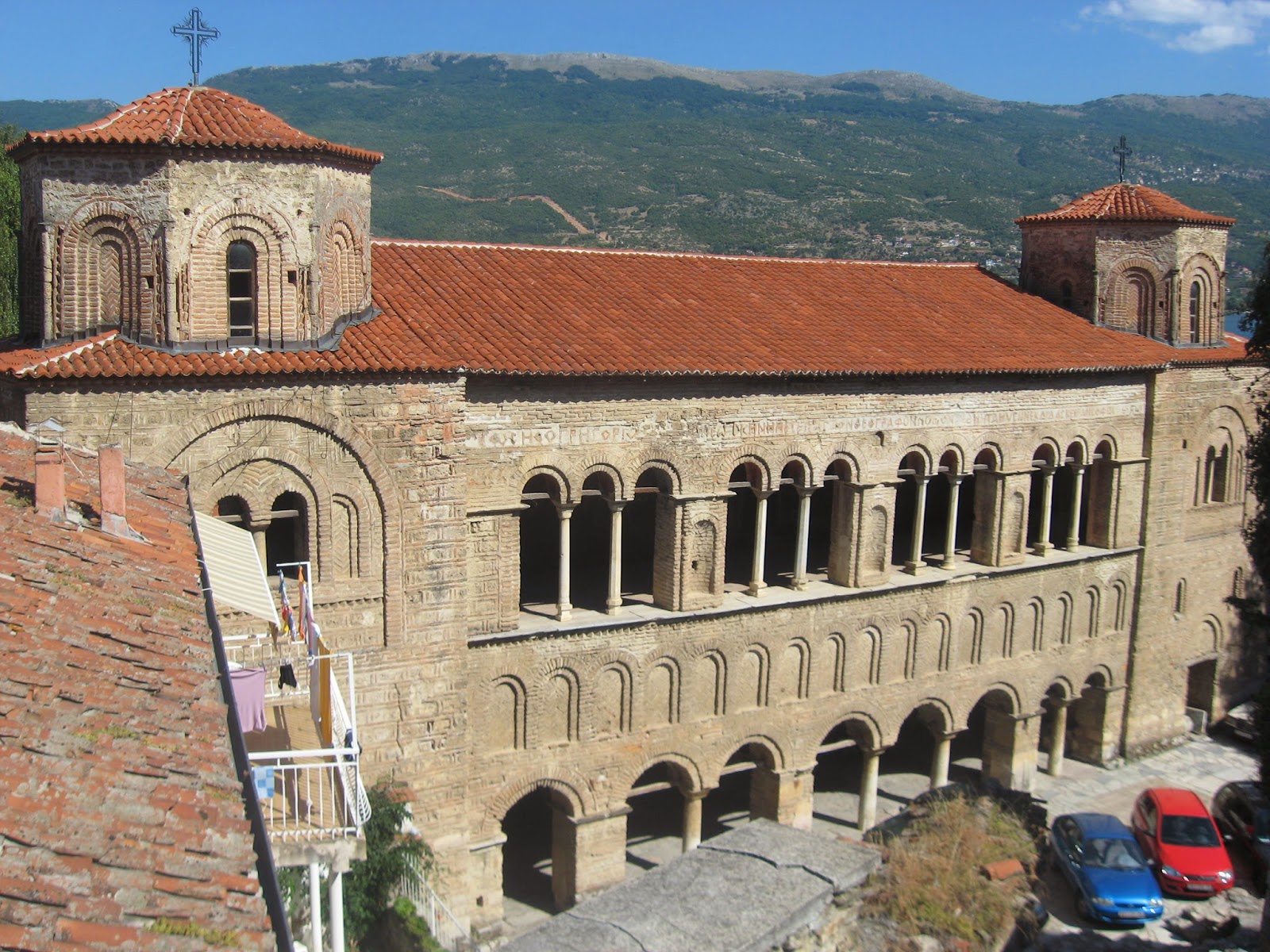
Ohrid is not only known for its natural beauty. The city boasts a unique past and, from chronicles, some of them ottoman, it was said that Ohrid had a total of 365 chapels in the past, something like one for each day of the year. Today its number is considerably lower, but the city is still full of little byzantine churches and chapels, next to imposing monasteries and cathedrals, which demonstrate the religious past and importance of Ohrid. Each church certainly has a story to tell to their visitors and inside of them there are priceless frescoes. From these temples, the most prominent are Saint Sophia Cathedral and the Monastery of Saint Clement and Saint Panteleimon. Saint Sophia Cathedral (second photo) was modeled after Constantinople's Saint Sophia and has lined columns creating pleasant arcades. Walking uphill, stands the Monastery of Saint Clement and Saint Panteleimon, originally a 5th-century basilica, with relics of these saints. Next to it, there is an apparently empty field, which is Archaeological Complex of Plaošnik, showing the foundations of a 4th-century church and mosaics of flora, birds and animal life.

The city is situated on a steep hill overlooking to the lake. At the top stands the Samuil's Fortress (third photo), named after the first emperor of Bulgaria, whose territory stretched till here and later became the capital. Ohrid has also a Roman Amphitheater, initially built to host theater, but later was used also to receive gladiators.

Ohrid is therefore a good choice for people traveling around the Balkans and looking for a combination of a rich historical and religious past with the natural beauty of breathtaking landscapes.


Quaisquer palavras serão insuficientes para descrever Ohrid. O Lago Ohrid, "A Safira dos Balcãs", banha esta pequena cidade da República da Macedónia e estabelece a fronteira entre o país e a vizinha Albânia. Aqui terminava a antiga Jugoslávia e era igualmente o limite dos povoamentos habitados pelos povos eslavos do sul, ou não fosse essa a própria designação do país: Jugo (sul) + Eslávia (terra eslava).

A beleza deste lago é indesmentível. A Igreja de São João no Caneo, com uma vista deslumbrante sobre e a praia com o mesmo nome, é um cartão de visita habitual da Macedónia. Daqui, é possível obter um panorama privilegiado e vislumbrar a Albânia, do outro lado. De facto, estes dois países partilham não só esta fronteira natural, mas também a beleza inerente a ela.

Ohrid não é conhecida apenas pela sua beleza natural. A cidade orgulha-se do seu passado ímpar e, em diversas crónicas, entre as quais otomanas, era afirmado que Ohrid possuía ao todo 365 capelas, qualquer coisa como uma para cada dia do ano. Hoje o seu número é consideravelmente inferior, mas na cidade proliferam ainda pequenas igrejas e capelas bizantinas, rodeadas de imponentes mosteiros e catedrais, que demonstram o passado rico e importância de Ohrid a nível religioso. Cada igreja terá certamente a sua história para contar aos seus visitantes e no seu interior encontram-se frescos de valores incalculáveis. Destes templos, destacam-se a Catedral de Santa Sofia e o Mosteiro de São Clemente e São Pantaleão. A Catedral de Santa Sofia (segunda foto) foi projectada seguindo o modelo da Santa Sofia de Constantinopla e apresenta colunas perfiladas, criando arcadas bastante elegantes. Um pouco acima, encontra-se o Mosteiro de São Clemente e São Pantaleão, originalmente uma basílica do século V, onde podem ser vistas relíquias desses santos. Logo ao lado, pode-se encontrar aquilo que parece um campo raso, mas que se trata do Complexo Arqueológico de Plaošnik, apresentando as fundações de uma igreja do século IV e mosaicos representando a flora, pássaros e vida animal.

A cidade situa-se numa colina escarpada com vista para o lago. No topo enconta-se o Forte de Samuel (terceira foto), que recebeu o nome do primeiro imperador da Bulgária, cujo território se estendia até aqui e que mais tarde viria a receber a capital. Ohrid possui também um Anfiteatro Romano, inicialmente construído para receber peças de teatro, mas que mais tarde seria usado para receber gladiadores.

Ohrid é assim uma óptima escolha para quem pretende aventurar-se pelos Balcãs e procura a combinação de uma passado histórico e religioso rico com belezas naturais de tirar o fôlego.

Wednesday, July 2, 2014

Day 1: Moscow (0 km) - Part 2

Back to the street, Andreja was there waiting me patiently. She asks me how it was inside, and I answer in few words. We have really short time and a long trip of 24 hours is waiting us till the next stop. There we can catch up, and talk about it without wasting time. In our case, time is a very scarce resource during this trip, since soon we will have 22 days to follow a very exigent plan, stopping in about 15 cities and spending several hours in trains. I prefer to comment that the weather suddenly has changed: after a gray morning, now the sun has come, creating a good atmosphere, perfect for an urban photo safari. In fact, when I travel, I always bring the camera with me, and I can't live without it. It is very important for me to take random snapshots of some of the places visited.

We do not waste more time and and so we take more photos of Saint Basil's Cathedral, now enjoying the blue sky, and few minutes later we hit the road, following the Moskva river, down to Gorky Park, like in Scorpions' famous song.

After arriving to Saint Sophia Embankment, I recall a curious episode, when I came first time here and was stopped by the police for taking pictures of Kremlin. That time I was very scared, because I read many articles about foreigners being fined in Russia for taking pictures of military or official buildings, metro stations or even public places. This is therefore a good opportunity for the police to ask foreign tourists for their passports and get in exchange a generous contribution (aka bribe). I can't even imagine how it was during soviet times... There are still some strange laws concerning this, but of course things have changed. Actually, people told me that for these changes contributed the Prime-Minister Medvedev, who is an amateur photographer. But that time nothing happened, maybe that police officer was just having a bad day. 

From this embankment it is possible to obtain a privileged perspective over Kremlin walls and towers, and also see Ivan the Great Bell Tower (first photo). More distant, several skyscrapers come up: a building of pure Stalinist Architecture, which is one of the famous "Seven Sisters", hosting today the Ministry of Foreign Affairs and the ultra-modern towers of the brand new International Business Center "Moskva-City" (second photo).

We quickly start seeing the enormous Cathedral of Christ the Savior (third photo). This holly giant block on the riverside was demolished by the communists, following their hatred towards religions, eventual factor of people's division. In its place, they tried to build a colossal structure meant to be Palace of Soviets: a 415 meters skyscraper with a giant statue of Lenin on the top of it. Something like a birthday cake with a cherry on the top. As most of socialist projects, this one was not finished and only ended up with the destruction of the world's biggest orthodox cathedral, which was rebuilt in the 90s.

Even knowing that Andreja is not very fond of churches, I use the excuse of going inside and put a candle and pray that God can protect us during this very long trip. As I expected, Andreja was well quicker in her praying, and she is already walking around the church impatiently, since she feels uncomfortable inside orthodox temples. However, by mutual agreement, we decide to explore the cathedral, and this way to visit the underground floor, also very beautiful and with much less visitors.
(To be continued...)


De volta ao exterior, a Andreja esperava-me pacientemente. Pergunta-me como tinha sido lá dentro, ao que eu respondo de forma lacónica. O tempo que dispomos é reduzido e espera-nos uma longa travessia de 24 horas de comboio até à primeira paragem. Lá poderemos pôr a conversa em dia, sem perder tempo. No nosso caso, o tempo é um recurso bastante escasso, dado que se avizinham 22 dias para seguir um plano bastante exigente, composto por cerca de 15 paragens e várias horas passadas dentro de comboios. Prefiro comentar a repentina mudança de tempo: depois de uma manhã cinzenta, o sol dá agora um ar da sua graça, criando uma atmosfera propícia a um safari fotográfico pela cidade. De facto, quando viajo venho sempre munido da minha máquina fotográfica, não conseguindo passar sem ela e sem registar alguns dos lugares visitados para a posteridade. 

Não perdemos mais tempo e remediamos as fotos tiradas à Catedral de São Basílio com céu cinzento, agora com um céu mais azul e, passados poucos minutos, já nos fazemos à estrada, seguindo o rio Moscovo, em direcção ao Parque Gorki, tal como na famosa canção dos Scorpions.

Chegados à Margem de Santa Sofia, vem-me à memória um epísódio curioso, passado a quando da minha primeira viagem a Moscovo, em que fui aqui parado por um polícia, por estar a tirar fotos ao Kremlin. Naquele tempo fiquei bastante assustado, pois tinha lido vários artigos mencionando estrangeiros que foram multados na Rússia, por tirarem fotografias a edifícios militares ou oficiais, estações de metro, ou mesmo em locais públicos. Esta é assim uma boa oportunidade para a polícia perguntar aos turistas estrangeiros pelo seus passaportes e receber em troca uma generosa contribuição (ou suborno). Não consigo imaginar como seria durante o período da União Soviética. Ainda existem algumas leis estranhas sobre estas questões, mas claro que com o tempo muita coisa mudou. Com efeito, tenho ouvido dizer que o principal responsável por essas mudanças foi o Primeiro-Ministro Medvedev, por sinal um fotografo amador. Mas naquela ocasião nada aconteceu, talvez o polícia apenas estivesse a passar um mau dia. 

Desta margem é possível obter uma perspectiva privilegiada para as muralhas e torres do Kremlin, bem vislumbrar a Torre Sineira de Ivan o Grande (primeiro foto). Mais distante saltam à vista diversos arranha-céus: um edifício em pura Arquitectura Estalinista, pertence ao grupo das famosas "Sete Irmãs", albergando actualmente o Ministério dos Negócios Estrangeiros, e ainda as torres ultra-modernas do recém-criado Centro Internacional de Negócios "Moskva-City" (segunda foto). 

Depressa avistamos também a enorme Catedral do Cristo o Salvador (terceira foto). Este bloco gigante de santidade na margem do rio Moscovo tinha sido demolido pelos comunistas, movidos pelo ódio às religiões, factor potencial de divisão dos povos. No seu lugar tentaram construir o colossal Palácios dos Sovietes, uma estrutura de 415 metros com uma gigante estátua do Lenine no topo. Qualquer coisa com um bolo de aniversário com uma cereja no topo.

Mesmo sabendo que a Andreja não gosta muito de igrejas, decido usar a desculpa de entrarmos, pormos uma vela e rezarmos para que Deus nos proteja durante esta longa viagem. Como eu esperava, a Andreja foi bem mais curta nas suas orações e já caminhava à volta da igreja com alguma impaciência, dado o seu pouco à vontade dentro de templos ortodoxos. No entanto, por mútuo acordo, decidimos explorar a catedral e assim, visitámos igualmente o piso inferior, que nada fica a dever ao superior e onde se encontravam muito menos visitantes.
(Continua...)

Tuesday, July 1, 2014

Day 1: Moscow (0 km) - Part 1


Moscow, the capital of Russia, has an official population of roughly 12 million inhabitants, but with estimates that largely exceed this number, due to the high migration flows of people coming from Caucasus, Central Asia and also other regions of Russian Federation. If we exclude the population on the Asian side of Istanbul, Moscow is the biggest city in Europe. Moscow is an old bastion of soviet culture, but where modernity is starting to penetrate.  

Me and Andreja, my travel companion, walk down on the always dynamic Tverskaya Street, passing by Manezhnaya Square and equestrian statue of Marshal Zhukov (first photo), entering the Ressurection Gate, straight to Red Square. There we can say goodbye to some of the greatest attractions of this city: the imposing Kremlin, the luxurious commercial gallery GUM and the pompous and colorful Saint Basil's Cathedral.

Approaching the famous statue of Nikita Minin and Dmitry Pozharsky (second photo), two heroes who saved Moscow from the invaders, I decide to enter alone in church, something that Andreja has done in the past.

The magnificent Saint Basil's Cathedral, was built between 1555 and 1561, at the orders of Ivan IV, to commemorate the capture of Kazan and Astrakhan, along river Volga. Legend held that the tsar Ivan the Terrible blinded the architect responsible for the construction so that he could not re-create this masterpiece elsewhere. Now, after so many times walking around this temple, I can't resist and I enter. Right at the entrance, I feel amazed by the beauty of its interior, thanks to the wealth of its frescoes (third photo) and icons. More astonished I become when I see the tomb of Basil the Blessed and the marvellous iconostasis that gilds this chapel inside the cathedral. There believers can pray fervently, showing all their devotion and respect for him. Respect is something that reigns inside Russian Orthodox temples, usually guarded by one or more old ladies, who make sure that everything is in order and visitors behave accordingly. In fact, thanks to these guardians, or from the austerity of orthodox images, the respect and silence is present here. The silence is over when I go upstairs and start to listen to very beautiful voices singing orthodox choir music. I stay there next to the wall, listening these celestial sounds and it touches me. Back to the reality, I enter and greet the choir, and I talk with them briefly. Then, I visit all other inner chapels and come back to Andreja, who is waiting me outside.
(To be continued...)


Moscovo, a capital da Rússia, apresenta uma população oficial de cerca de 12 milhões de habitantes, embora com estimativas que superam largamente esse número, devido aos elevados fluxos migratórios de pessoas provenientes de países do Cáucaso, Ásia Central e ainda de outras regiões da Federação Russa. Se excluirmos a população asiática de Istambul, Moscovo é a maior cidade do continente europeu. Moscovo é um antigo bastião da cultura soviética, mas onde a modernidade começa a penetrar.

Eu e a Andreja, minha companheira de viagem, descemos a sempre movimentada Rua Tverskaya, passando pela Praça Manejnaia e pela estátua equestre do Marechal Jucov (primeira foto), atravessando o Porta da Ressurreição, em direcção à Praça Vermelha. Lá pudemos despedir-nos de algumas das principais atracções desta cidade: o majestoso Kremlin, a luxuosa galeria comercial GUM e a faustosa e colorida Catedral de São Basílio. Aproximando-­me da famosa estátua de Nikita Minin e Dmitri Pojarski (segunda foto), dois heróis que salvaram Moscovo dos invasores, decido entrar sozinho na catedral, algo que a Andreja já tinha feito.  

A espantosa Catedral de São Basílio, imagem de marca de Moscovo, foi construída entre 1555 e 1561, sob as ordens de Ivan IV, como forma de celebrar as conquistas de Kazan e Astracã, ao longo do rio Volga. Rezam as crónicas que o czar, ou não fosse ele Ivan o Terrível, mandou cegar o seu arquitecto para que nunca mais pudesse recriar uma obra com esta beleza.  Desta vez, depois de tantas passagens e miradas à volta deste templo, não resisto e entro. Logo à entrada, fico maravilhado com a beleza do seu interior, devido à riqueza dos seus frescos (terceira foto) e ícones. Mais maravilhado fico ao vislumbrar o túmulo de Basílio o Bem-­aventurado e a magnífica iconóstase que engalana esta capela no interior da catedral. Aí os crentes podem rezar fervorosamente, demonstrando toda a sua devoção e respeito por ele. Respeito é mesmo uma palavra que impera dentro dos templos ortodoxos russos, frequentemente guardados por uma ou mais senhoras idosas que asseguram que tudo se encontra em ordem e que os visitantes se comportam de acordo com uma pretensa normalidade. Pelos vistos, devido a estas guardiãs dos templos, ou mesmo pela própria austeridade das imagens religiosas ortodoxas, o respeito e o silêncio estão bem presentes aqui. O silêncio é interrompido quando subo ao piso superior e começo a ouvir vozes cristalinas cantando recitais ortodoxos. Deixo-me ficar encostado à parede, ouvindo aqueles sons celestiais e comovo-me. Quando volto à realidade, entro e cumprimento os responsáveis por este momento bonito e troco dois dedos de conversa com eles. Depois, visito as outras belas capelas interior e volto para a Andreja, que espera por mim lá fora.
(Continua...)