Showing posts with label Balkans. Show all posts

Tuesday, July 22, 2014

Lake Ohrid, Balkan Sapphire


No words will be enough to describe Ohrid. Lake Ohrid, the "Sapphire of the Balkans", bathes this little city in the Republic of Macedonia and establishes the border between the country and the neighbor Albania. Here ended the former Yugoslavia, and was also the limit of the settlements inhabited by South Slavs, or it was not this the designation of the country: Yugo (south) + Slavia (Slavic land).

The beauty of this lake is astonishing. The Church of Saint John at Kaneo (first photo), with a marvelous view over the lake and the beach with the same name, is an usual visit card of Macedonia. From here, it is possible to get a privileged panorama and see Albania, on the other side. In fact, these two countries share not only this natural border, but all the beauty from it.

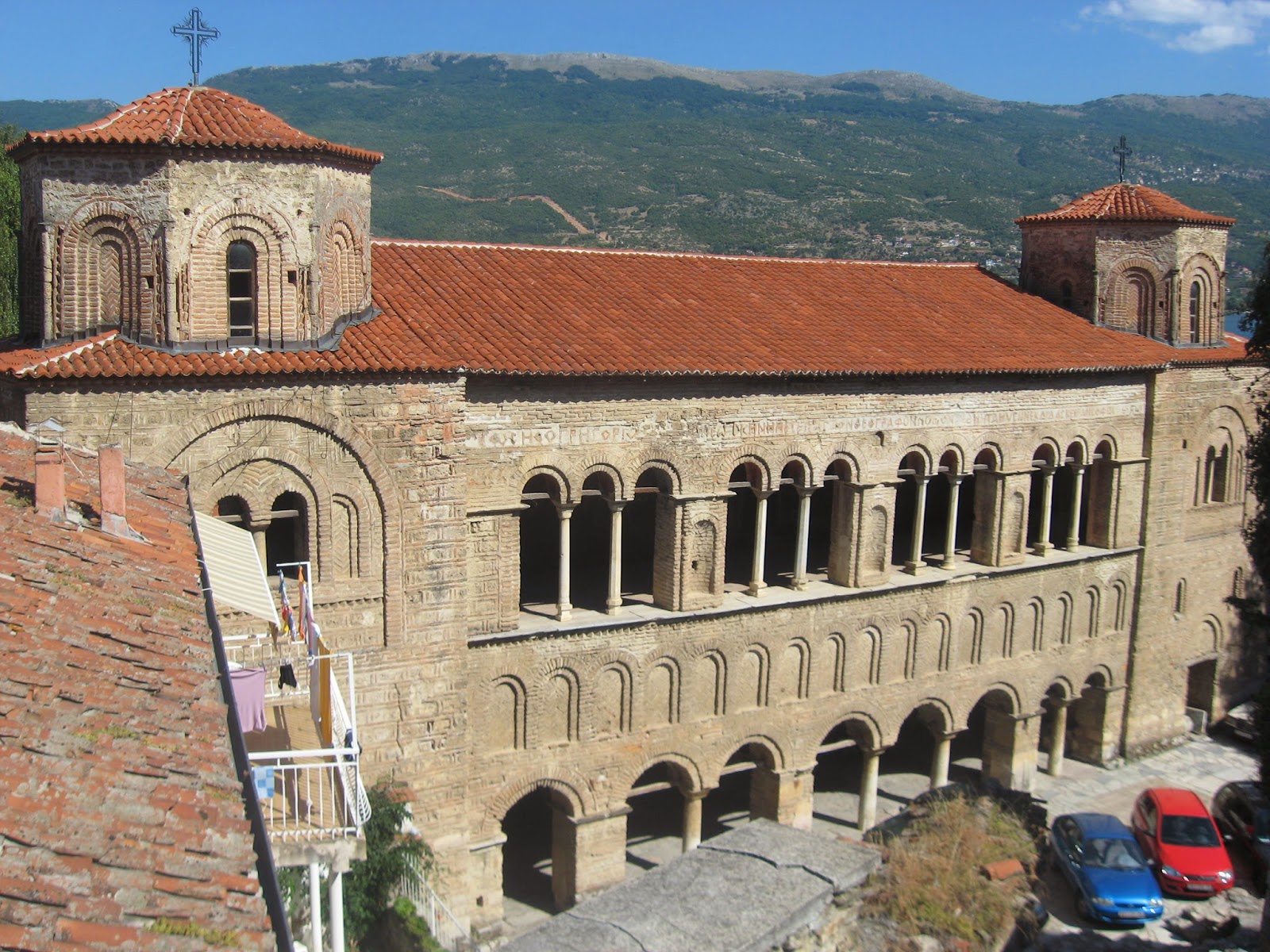
Ohrid is not only known for its natural beauty. The city boasts a unique past and, from chronicles, some of them ottoman, it was said that Ohrid had a total of 365 chapels in the past, something like one for each day of the year. Today its number is considerably lower, but the city is still full of little byzantine churches and chapels, next to imposing monasteries and cathedrals, which demonstrate the religious past and importance of Ohrid. Each church certainly has a story to tell to their visitors and inside of them there are priceless frescoes. From these temples, the most prominent are Saint Sophia Cathedral and the Monastery of Saint Clement and Saint Panteleimon. Saint Sophia Cathedral (second photo) was modeled after Constantinople's Saint Sophia and has lined columns creating pleasant arcades. Walking uphill, stands the Monastery of Saint Clement and Saint Panteleimon, originally a 5th-century basilica, with relics of these saints. Next to it, there is an apparently empty field, which is Archaeological Complex of Plaošnik, showing the foundations of a 4th-century church and mosaics of flora, birds and animal life.

The city is situated on a steep hill overlooking to the lake. At the top stands the Samuil's Fortress (third photo), named after the first emperor of Bulgaria, whose territory stretched till here and later became the capital. Ohrid has also a Roman Amphitheater, initially built to host theater, but later was used also to receive gladiators.

Ohrid is therefore a good choice for people traveling around the Balkans and looking for a combination of a rich historical and religious past with the natural beauty of breathtaking landscapes.


Quaisquer palavras serão insuficientes para descrever Ohrid. O Lago Ohrid, "A Safira dos Balcãs", banha esta pequena cidade da República da Macedónia e estabelece a fronteira entre o país e a vizinha Albânia. Aqui terminava a antiga Jugoslávia e era igualmente o limite dos povoamentos habitados pelos povos eslavos do sul, ou não fosse essa a própria designação do país: Jugo (sul) + Eslávia (terra eslava).

A beleza deste lago é indesmentível. A Igreja de São João no Caneo, com uma vista deslumbrante sobre e a praia com o mesmo nome, é um cartão de visita habitual da Macedónia. Daqui, é possível obter um panorama privilegiado e vislumbrar a Albânia, do outro lado. De facto, estes dois países partilham não só esta fronteira natural, mas também a beleza inerente a ela.

Ohrid não é conhecida apenas pela sua beleza natural. A cidade orgulha-se do seu passado ímpar e, em diversas crónicas, entre as quais otomanas, era afirmado que Ohrid possuía ao todo 365 capelas, qualquer coisa como uma para cada dia do ano. Hoje o seu número é consideravelmente inferior, mas na cidade proliferam ainda pequenas igrejas e capelas bizantinas, rodeadas de imponentes mosteiros e catedrais, que demonstram o passado rico e importância de Ohrid a nível religioso. Cada igreja terá certamente a sua história para contar aos seus visitantes e no seu interior encontram-se frescos de valores incalculáveis. Destes templos, destacam-se a Catedral de Santa Sofia e o Mosteiro de São Clemente e São Pantaleão. A Catedral de Santa Sofia (segunda foto) foi projectada seguindo o modelo da Santa Sofia de Constantinopla e apresenta colunas perfiladas, criando arcadas bastante elegantes. Um pouco acima, encontra-se o Mosteiro de São Clemente e São Pantaleão, originalmente uma basílica do século V, onde podem ser vistas relíquias desses santos. Logo ao lado, pode-se encontrar aquilo que parece um campo raso, mas que se trata do Complexo Arqueológico de Plaošnik, apresentando as fundações de uma igreja do século IV e mosaicos representando a flora, pássaros e vida animal.

A cidade situa-se numa colina escarpada com vista para o lago. No topo enconta-se o Forte de Samuel (terceira foto), que recebeu o nome do primeiro imperador da Bulgária, cujo território se estendia até aqui e que mais tarde viria a receber a capital. Ohrid possui também um Anfiteatro Romano, inicialmente construído para receber peças de teatro, mas que mais tarde seria usado para receber gladiadores.

Ohrid é assim uma óptima escolha para quem pretende aventurar-se pelos Balcãs e procura a combinação de uma passado histórico e religioso rico com belezas naturais de tirar o fôlego.

Thursday, July 10, 2014

Guča, Trumpet Assembly


The first time I heard about Guča, I was travelling in the Republic of Srpska, North of Bosnia. Waiting for a bus connection, I start to hear the noise of horns and people singing. Far way, coming from a mountain road, it was possible to see many cars with Serbian flags, full of people singing out loud and drinking beer. The parade was so long that looked like the peloton of the Tour of France. One car stopped next to me and, maybe because I was carrying my backpack, someone opens the window and asks me in Serbian: "Hey, boy! Are you going to Guča? Do you want a ride?" I answer with a question, revealing my ignorance and curiosity about where is Guča and what is going on there. "You do not know? Guča is the greatest event in the region! Come with us!"I know that this kind of invitations and offers are completly normal in Balkans, however I already had plans and route defined, and so I thank them and decline the proposal.

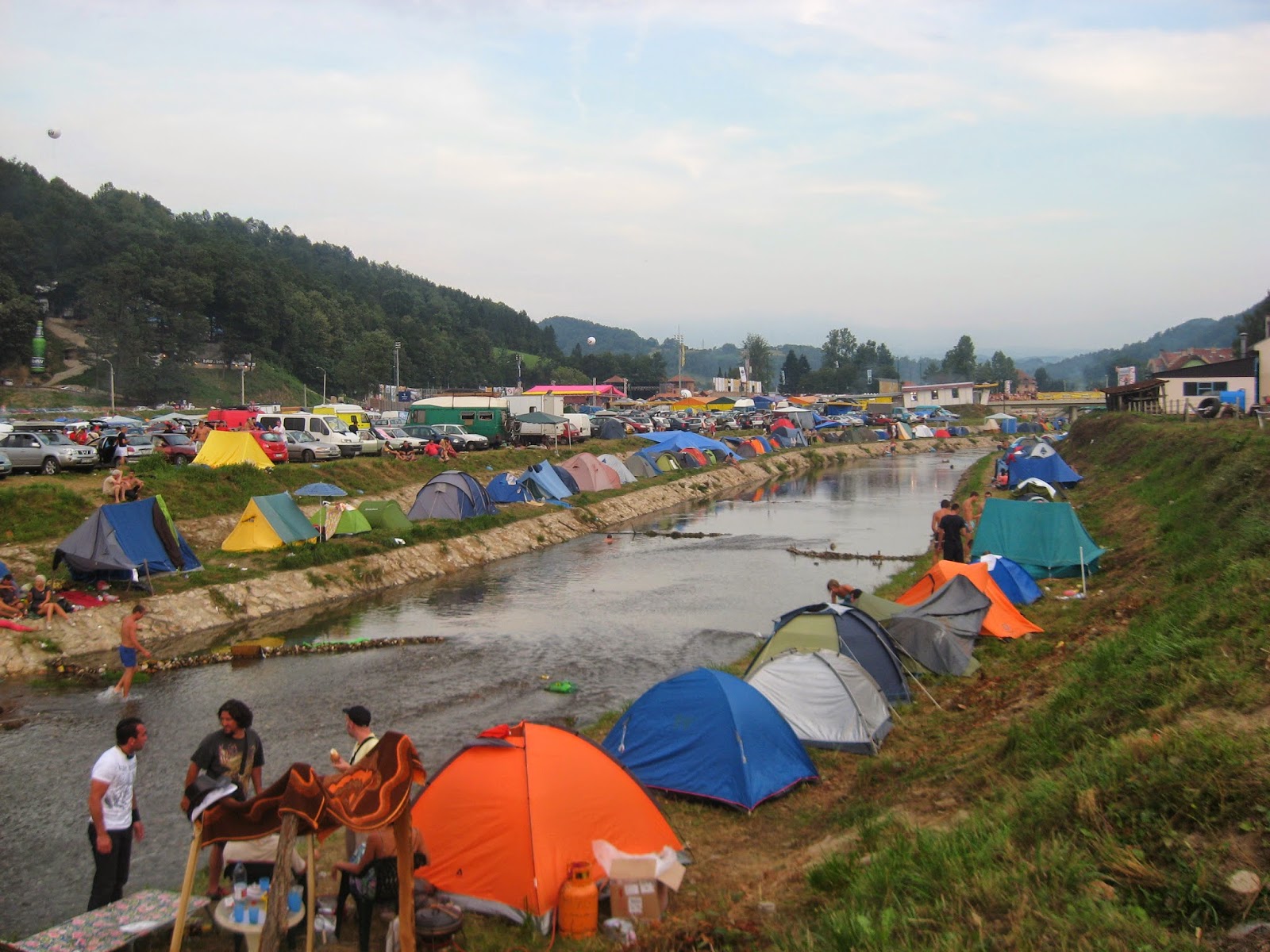
It was the first time I heard about Guča. Back home, I had to get more information about it. Guča is a small village in Serbia (first photo), near Čačak, with only 2.000 inhabitants. However, the villages gets bigger, every summer, in order to organize the greatest festival of Balkan folk music. On the other hand, the village turns out to be too small to receive about 100.000 daily visitors, who follow the winding mountain roads in order to stand their tents in the Meca of gypsy Balkan music (second photo).

The streets of Guča are full of joy and fun, with many bands playing in fanfares and people colaborating, dancing in circules the kolo, a south slavic traditional dance. The fanfares, playing trumpets and horns, approach visitors and propose : "If you give me 150 dinars (1,50 euro), I play for you during 20 seconds" . The joy is contagiating and visitors easily enter in the spirit of the party.

In the end of the night, the stadium gets full to receive concerts of traditional folk bands or even famous names, such as Goran Bregović & the Wedding and Funeral Band (third photo), or father and son, Boban and Marko Marković. But the party keeps moving on the streets until the dawn of the day.

Below, I leave links for the concert that I had the opportunity to watch in 2010, corresponding with the 50th edition of this festival. Goran Bregović, songwriter of many songs from the soundtracks of Emir Kusturica's movies, gave a fantastic performance, for the happiness of people who came to the festival.

Guča Festival is a smart choice for someone who likes adventures and alternative festivals, out of the usual environment lived in Western Europe. The festival reaching its 54th edition and it has already the dates from 6th to 10th August.


A primeira que ouvi falar de Guča, estava a viajar na República da Srpska, norte da Bósnia. Esperando uma ligação de autocarro, começo a ouvir o barulho de buzinas e cânticos. Ao fundo, vindos da estrada de montanha, vislumbram-se vários carros trajados com bandeiras da Sérvia, cheios de pessoas a cantarem a plenos pulmões e a beberem cerveja. O cortejo era longo e mais parecia o pelotão da Volta à França. Um carro pára junto a mim e, talvez por eu estar de mochila às costas, alguém abre a janela e perguntam-me em sérvio: "Ei rapaz! Vais para Guča? Queres boleia?" Respondo com uma pergunta, revelando a minha ignorância e curiosidade sobre onde fica e o que se vai passar lá. "Não sabes? Guča é o maior acontecimento da região! Vem daí connosco!" Sei que este tipo de convites e oferta de boleia são completamente normais nos Balcãs, contudo já tinha os meus planos e roteiro definido, por isso, agradeço e recuso a proposta.

Foi a primeira vez que ouvi falar de Guča. De regresso a casa, não descansei enquanto não obtive mais informações. Guča é uma pequena vila sérvia (primeira foto), perto de Čačak, com apenas 2.000 habitantes. No entanto, a vila engrandece-se, todos os verões, para organizar o maior festival de música tradicional balcânica. Por outro lado, a vila torna-se pequena para receber os cerca de 100.000 visitantes diários, que percorrem as sinuosas estradas de montanha para montar a tenda na Meca da música cigana dos Balcãs (segunda foto).

As ruas de Guča enchem-se de animação, com várias bandas a tocar em fanfarra e com as pessoas a colaborarem, dançando em círculos o kolo, uma dança tradicional dos povos eslavos do sul. As fanfarras, tocando trompas e trompetes, não fazem por menos e apregoando: "Se me deres 150 dinares (1,50 euros), eu toco para ti durante 20 segundos." A alegria é contagiante e os visitantes entram facilmente no espírito da festa. 

Ao final da noite, o estádio enche-se para receber bandas tradicionais ou ainda nomes mais consagrados como Goran Bregović (terceira foto) ou pai e filho, Boban e Marko Marković, mas a festa continua pelas ruas, até ao sol raiar. 

Em baixo deixo links do concerto que tive a oportunidade de assistir em 2010, que correspondeu aos 50 anos do festival. O Goran Bregović, compositor de várias músicas pertencentes à banda sonora dos filmes de Emir Kusturica, deu um concerto fantástico, levando ao rubro as muitas pessoas que acorreram nesse ano ao festival.

O Festival de Guča é uma óptima opção para quem gosta de aventuras e festivais alternativos, fora dos habituais ambientes vividos na Europa. O Festival vai realizar brevemente a sua 54ª edição e já tem datas marcadas de 6 a 10 de Agosto.

Goran Bregović 

Mesečina
https://www.youtube.com/watch?v=ZFApPTKIR4U

Čaje, šukarije
https://www.youtube.com/watch?v=TU4Bm9wO_w0

Šoferska
https://www.youtube.com/watch?v=NIBwuD9XDMo

Đurđevdan
https://www.youtube.com/watch?v=cglYFJUsWtE

Alo Alo - Gas Gas
https://www.youtube.com/watch?v=I89oGR4hYlY


Manijači 
https://www.youtube.com/watch?v=H8zJq3EkEs8

Na'tan Ixara Oikopedo
https://www.youtube.com/watch?v=YYLDBeiPTjU

Gas Gas
https://www.youtube.com/watch?v=yRz1Fht4kv4

Šta ima novo
https://www.youtube.com/watch?v=mHNdtMhHKPo

Ružica si bila 
https://www.youtube.com/watch?v=8MvGYtKfVXk

Underground čoček 
https://www.youtube.com/watch?v=hDzvFaTKizY

Saturday, June 28, 2014

Sarajevo, the trigger for the World War I


Sarajevo, 28th June 1914. In this fatidical day, the Archduke Franz Ferdinand, heir of the Austro-Hungarian Empire, and her wife, Sophie of Hohenberg were murdered in Sarajevo, capital of Bosnia, one of the provinces of the empire. After a first failed attempt with a bomb and a speech at the former building of the City Hall, now the National Library (first photo), the company followed its way and Franz Ferdinand his fatal destiny. Passing the Latin Bridge (second photo), Gavrilo Princip, member of the organization "Black Hand" shot twice killing the potential heirs of Austro-Hungarian Empire, with the goal to claim the authority of these territories back to the hands of the south Slavic people and consequently the creation of a Great Serbia. This assassination was the trigger for the beginning of the First World War in Europe during a time of great tension and rivalries among countries. Today, after 100 years, Vienna Philarmonic Orchestra had a grand performance to mark this date and to celebrate the reconstruction of the National Library, place where the concert was held.

Sarajevo is a fantastic city, where West meets East. Here is possible to observe a clear division of the city between its typical Austro-Hungarian architecture, establishing a contrast with the Ottoman quarter Baščaršija (third photo), as well as the houses populating the hills of the city. In this city several cultures and religions lived together: Muslims, Christian Catholics and Orthodox and Jews. It is perhaps one of the only cities in the world where it is possible to find several mosques, a catholic cathedral, an orthodox church and synagogue only few meters distant. The recent history has associated this city with black periods, due to various conflicts that happened in this city, and that destroyed much of its heritage, including priceless books and manuscripts, after the fire in the National Library during the civil war in former Yugoslavia. In fact, Sarajevo Haggadah, written in 1350, is considered  by many to be the most valuable book in the world, and has miraculously escaped from an attack to the National Museum of Bosnia and Herzegovina, where today can be found.

The Balkans are a very special region for me and Sarajevo is a mandatory stop of my tours around this region. Here I have passed 4 times and I can't get tired of coming back. Sarajevo is year by year better prepared to receive tourists and it is surprisingly very safe. Personally, there is something in the air that makes feel like home. I strongly recommend a visit to this special and lively city. For sure I will have the opportunity to publish more pictures and comments about this city and others in the Balkans.


Sarajevo, 28 de Junho de 1914. Neste fatídico dia, o Arquiduque Francisco Fernando, herdeiro do Império Austro-Húngaro, e sua esposa, a duquesa Sofia de Hohenberg foram assinados em Sarajevo, capital da Bósnia, uma das províncias do império. Após uma primeira tentativa de atentado à bomba falhado e de ainda ter efectuado um discurso no edifício antigo edifício da Câmara Municipal, agora Biblioteca Nacional (primeira foto), a comitiva seguiu o seu caminho e Francisco Fernando o seu destino fatal. À passagem na Ponte Latina (segunda foto), Gavrilo Princip, membro da organização "Mão Negra" desferiu dois tiros que iriam vitimar os potenciais herdeiros do Império Austro-Húngaro, com o intuito de reclamar autoridade dos povos eslavos do sul sobre estes territórios e consequentemente a criação da Grande Sérvia. Este assassinato fez eclodir a Primeira Guerra Mundial na Europa que vivia um clima de enorme tensão e rivalidade entre países. Hoje, após 100 anos, a Orquestra Filarmónica de Viena realizou uma grande performance para marcar esta data e celebrar a reconstrução da Biblioteca Nacional, lugar onde teve lugar o concerto.

Sarajevo é uma cidade fantástica, onde o Ocidente encontra o Oriente. Aqui é possível observar uma clara divisão da cidade entre os edifícios tipicamente de arquitectura Austro-Húngara que contrastam com o bairro otomano da Baščaršija (terceira foto), bem como as casas que povoam as colinas da cidade. Nesta cidade co-habitaram diversas culturas e religiões: muçulmanos, cristãos católicos e ortodoxos e judeus. Será uma das poucas cidades do mundo em que é possível encontrar várias mesquitas, uma catedral católica, uma igreja ortodoxa e uma sinagoga separadas por escassos metros. A história recente tem associado esta cidade a períodos negros, fruto dos diversos conflitos que deflagraram nesta cidade, e que destruíram bastante património, entre os quais livros e manuscritos de valor incalculável, após o incêndio na Biblioteca Nacional durante a Guerra Civil da ex-Jugoslávia. De facto, o Haggadah de Sarajevo, escrito em 1350, é considerado por muitos como o livro mais valioso do mundo, tendo escapado miraculosamente a um ataque ao Museu Nacional da Bósnia Herzegovina, onde hoje pode ser encontrado.

Os Balcãs são uma região muito especial para mim e Sarajevo é ponto de paragem obrigatória das minhas digressões pela região. Aqui já passei 4 vezes e não me canso de voltar. Sarajevo encontra-se ano após ano mais bem preparada para receber turistas e é contrariamente ao que se pensa uma cidade bastante segura. Pessoalmente, existe algo no ar que me faz sentir em casa. Recomendo vivamente uma visita a esta cidade muito especial e com bastante animação. Terei com certeza a oportunidade de publicar mais fotos e comentários sobre esta cidade e outras dos Balcãs.